Andrea del Sarto - Leda and the Swan
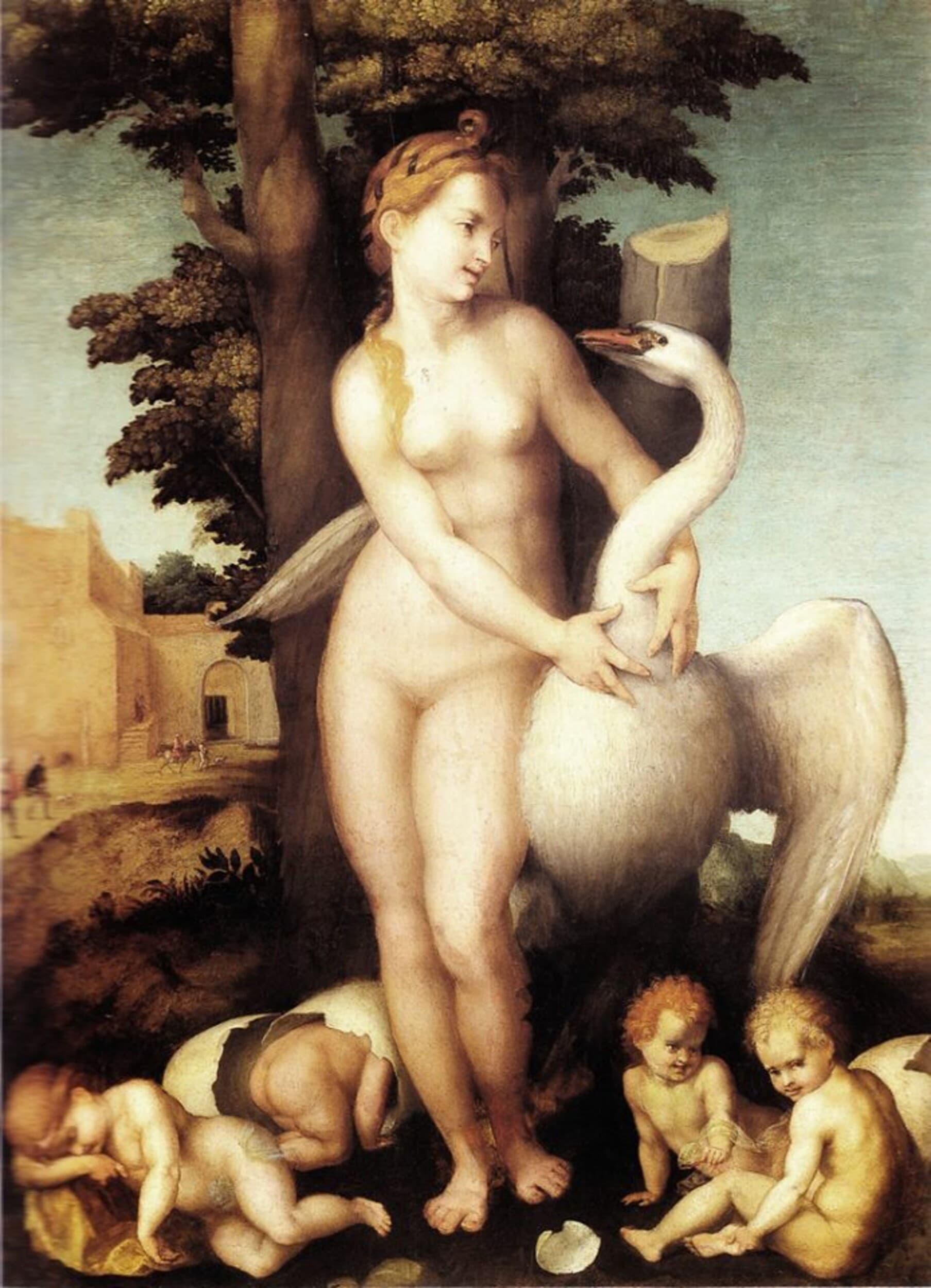
- Title: Leda and the Swan (Leda)
- Artist: Andrea del Sarto (1486-1530)
- Date: c.1490
- Medium: Oil on wood
- Dimensions: 102 x 76 cm
- Location: Musées royaux des Beaux-Arts de Belgique, Brussels, Belgium
Andrea del Sarto was a painter from Florence in Italy, mostly famous for his religious paintings. He painted many versions of of the Madonna, many with child. Some of his more famous works include frescoes at Basilica della Santissima Annunziata di Firenze (1509-1514), large altarpieces such as the Madonna of the Harpies (1517) and the painting "The Holy Family with the Young Saint John the Baptist" (1528), which is at the Metropolitan Museum.
Some of his work was influenced by Michelangelo's use of colors and muscular characters. Others use compositions reminiscent of Raphael as well as Michelangelo. More frequently than those however, he adorned faces he painted with a smile, sometimes even an open mouthed-laugh, which was a relatively new way of representing people.
And then there is the painting "Leda and the Swan" which is very different from his other works as classified in the catalogue raisonné of Natali and Cecchi. The catalog nonetheless includes this work and the Royal museums of Belgium recognizes it as being a work by Andrea del Sarto. Also the style is recognizable. The cherubs, born from the union of Leda and Zeus, look like Jesus and Joseph he has painted in other paintings. Leda also looks like models he has painted otherwise. But the female nudity and the mythological theme are quite different from his other works.
The painting exemplifies Renaissance humanism, focusing on the beauty and potential of the human form, as well as human emotions. Leda’s figure is idealized, emphasizing classical notions of beauty and grace. The intimate pose and interaction between Leda and the swan convey a sense of sensuality and tenderness.
A symbol to be explained: why is the tree behind the swan cut?
--