Georges de La Tour - Woman With a Flea (c.1635)
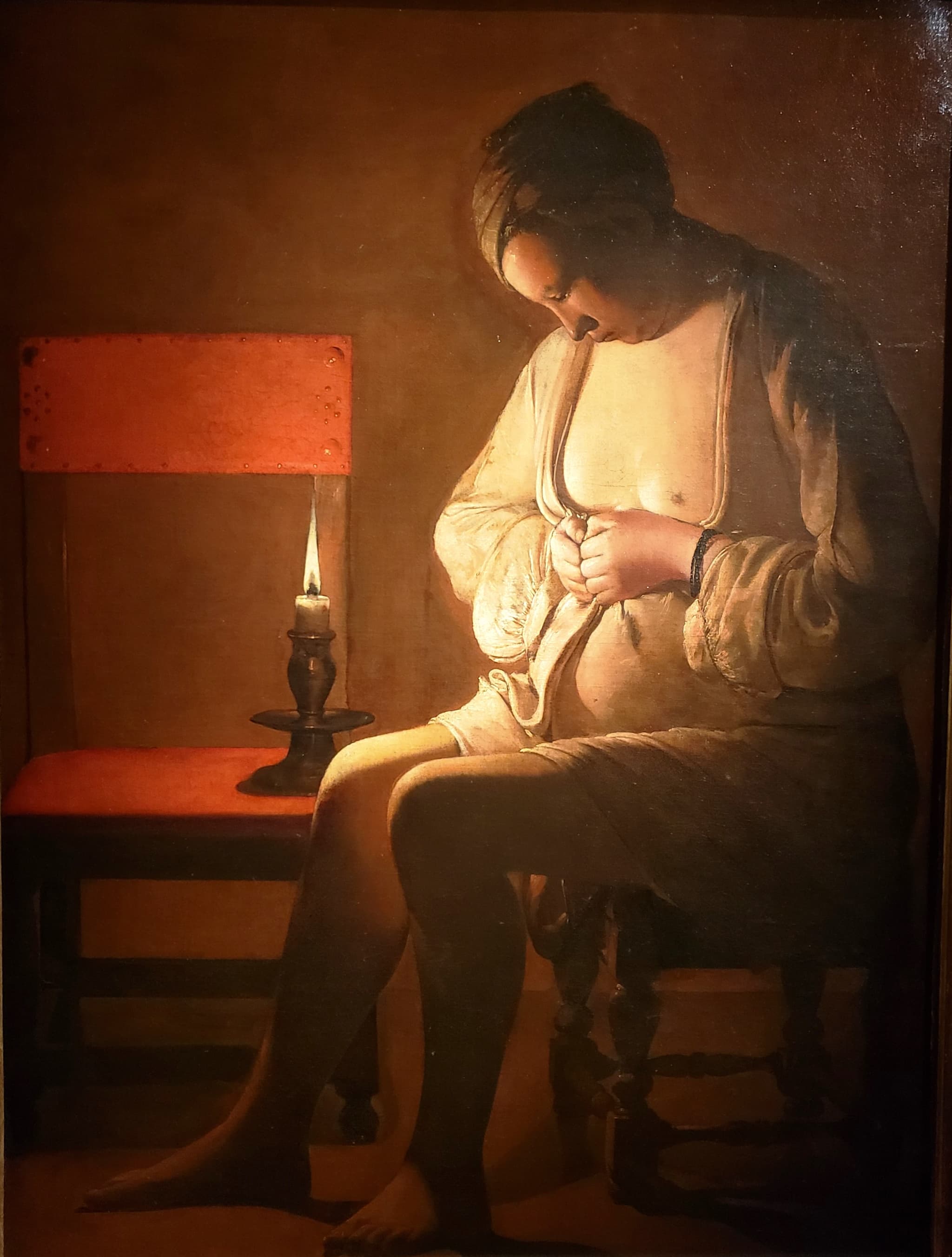
- Title: Woman With a Flea (Femme à la puce)
- Artist: Georges de La Tour (1593–1652)
- Date: c.1638
- Made in: Lunéville, France
- Medium: Oil on canvas
- Dimensions: 121 x 89 cm
- Location: Palais des ducs de Lorraine, Nancy, France
- Photo credit: Roland Tricot at musée Jacquemart-André on 14 January 2026
The painting "Femme à la puce" is a scène de genre by Georges de La Tour, a prominent figure of the Baroque period known for his mastery of chiaroscuro and candlelit scenes. This work depicts a woman in the act of catching a flea, a common yet intimate moment rendered with extraordinary realism and emotional depth. The painting is illuminated by a single candle, casting dramatic shadows and highlighting the textures of the woman's skin and clothing.
De La Tour's use of light and shadow creates a sense of intimacy and immediacy, drawing the viewer into the scene. The woman's expression and posture suggest a moment of quiet concentration, capturing the subtleties of everyday life with remarkable precision.
Most of known Georges de la Tour's paintings have a religious focus, modt often depicting a saint. On the Musée lorrain website, Pierre-Hippolyte Pénet draws a parrallel between paintings of the Penitent Magdalene by the same artist and Woman With a Flea. He writes: "Penitent Magdalene paintings in the Los Angeles County Museum of Art and the Louvre are similar in size and have an almost mirrored composition, can be interpreted as reflecting the fragility of life suggested by the skull and the flickering flame. Similarly, the gesture of removing the flea can symbolize the young woman's desire to free herself from sin, another form of parasitism. The purification of the body could thus be an evocation of the purification of the soul."
- At Musée lorrain de Nancy: Georges de La Tour: Femme à la puce
- On French Joconde website: Georges de La Tour: Femme à la puce