Paul Gauguin - The Yellow Christ (1889)
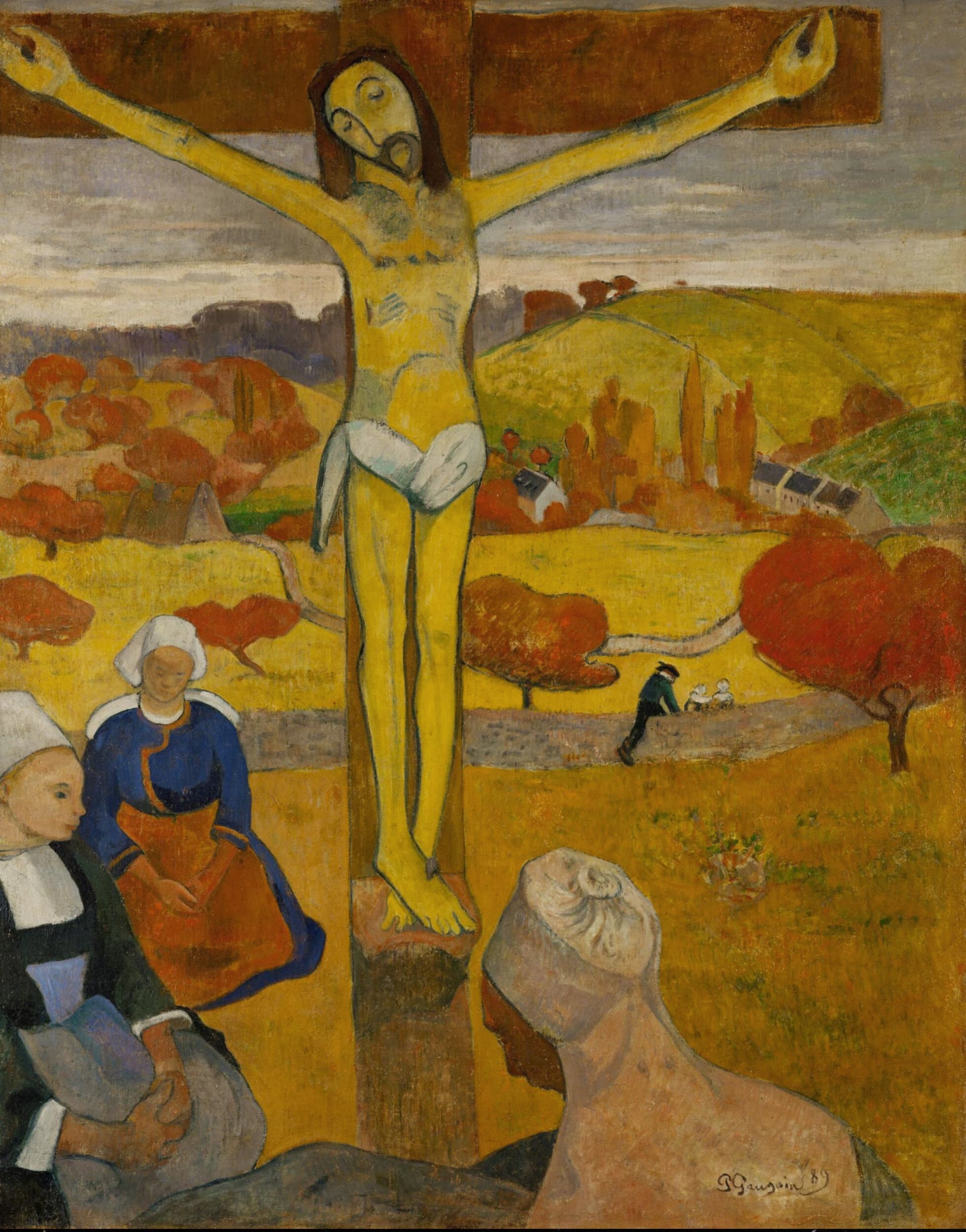
- Title: The Yellow Christ (Le Christ Jaune) (1889)
- Artist: Paul Gauguin (1848–1903)
- Date: 1889
- Medium: Oil on canvas
- Dimensions: 92 x 73 cm
- Location: Albright-Knox Art Gallery, Buffalo, New York, USA
Le Christ Jaune (The Yellow Christ) is a landmark painting by Paul Gauguin, created in 1889 during his time in Pont-Aven, Brittany. The work depicts a crucified Christ, rendered in striking yellow tones, set against a landscape of golden fields and a group of Breton peasants kneeling in prayer. The figure of Christ is inspired by a 17th-century wooden crucifix from the nearby Trémalo Chapel, which Gauguin reinterpreted with his signature cloisonnism technique—characterized by bold outlines and flat areas of color.
The painting is notable for its symbolic and spiritual depth, blending Christian iconography with Gauguin's personal vision of primitive simplicity and rural piety. The use of yellow not only unifies the composition but also conveys the artist's emotional response to the isolated, devout life of the Breton peasants.
Gauguin's fascination with Brittany's traditional culture and religious rituals is evident. The painting also reflects his personal struggles and his desire to escape the constraints of modern society.
"Le Christ Jaune" was painted during Gauguin's second stay in Pont-Aven, a period when he was deeply immersed in the local culture and religious practices. The painting captures the Angelus prayer, a Catholic devotion recited at dawn, noon, and dusk, which Gauguin observed among the Breton peasants. The crucifixion scene is set in a landscape that mirrors the region's autumn harvest, symbolizing cycles of life, death, and rebirth—a theme that resonated with Gauguin's spiritual and artistic quest.
The work is also a reflection of Gauguin's rejection of industrialization and urban life, as he sought to connect with what he perceived as a purer, more primitive existence. This period in Brittany was crucial in shaping his artistic identity and paved the way for his later travels to Tahiti.
"Le Christ Jaune" is considered one of the key works of Symbolism with Gauguin's use of bold colors, simplified forms, and cloisonnism created a visual language that broke away from Impressionism and laid the groundwork for modern art. The painting's emotional intensity and spiritual themes have made it a subject of extensive analysis, with scholars noting its influence on later movements such as Fauvism and Expressionism.
--