Louis-Jean-François Lagrenée - Cupid and Psyche (1767)
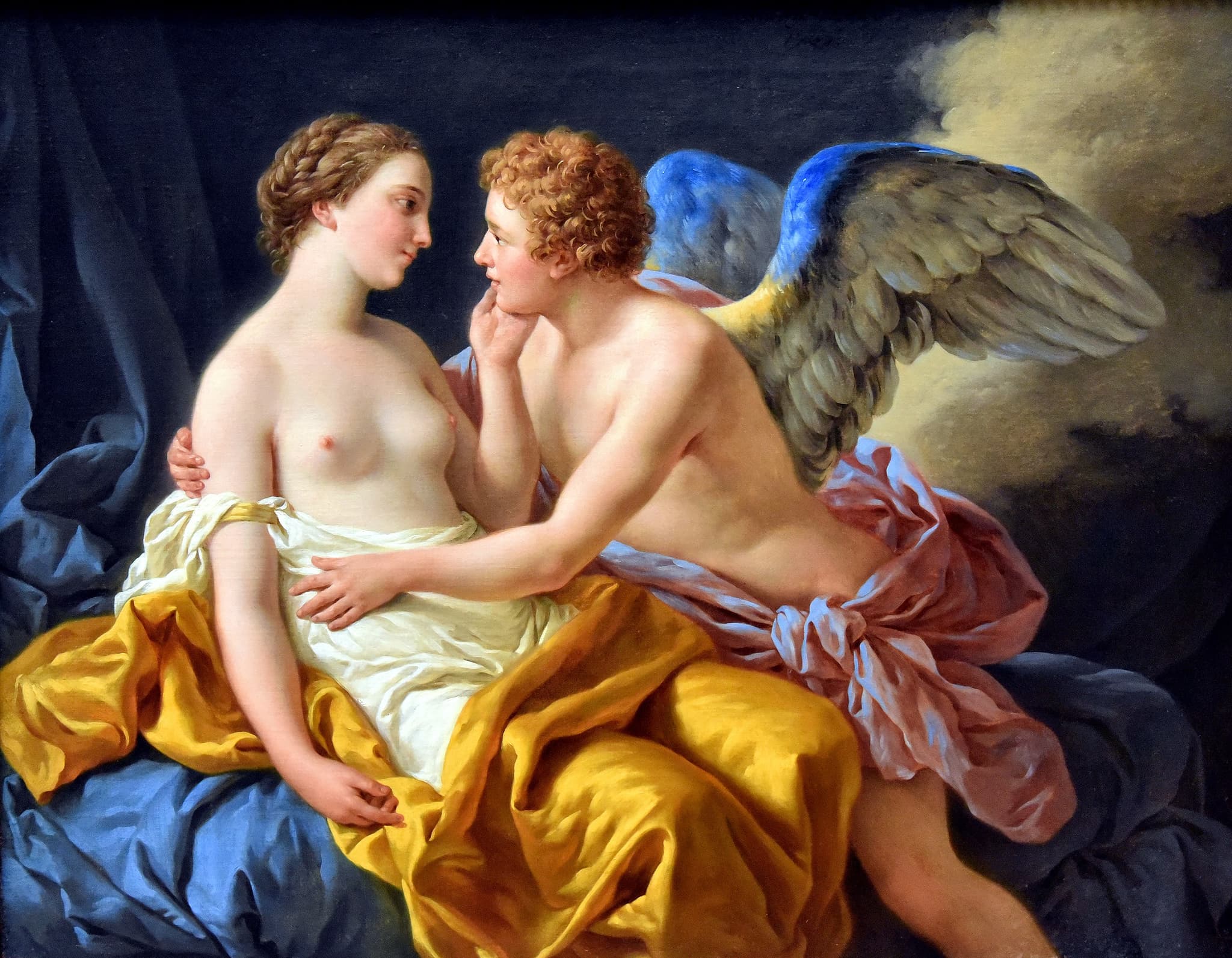
- Title: Cupid and Psyche
- Artist: Louis-Jean-François Lagrenée (1725–1805)
- Date: 1767
- Medium: Oil on canvas
- Dimensions: 55 x 71 cm
- Location: Nationalmuseum, Stockholm, Sweden
- Photo credit: Erik Cornelius from Nationalmuseum on Wikimedia
Louis-Jean-François Lagrenée’s "Cupid and Psyche" is a refined Rococo vision of the famous lovers. The painting shows the young god of love and the mortal Psyche as idealized, almost porcelain-smooth nudes set in a soft, atmospheric background made mostly of rich drapes. Their bodies form an elegant, flowing arabesque, framed by fluttering drapery and Cupid’s wings, so that composition and line already suggest the theme of irresistible attraction.
Psyche is shown partially draped, her pale body turned toward Cupid in a mixture of shyness and surrender. Cupid, youthful and beautifully proportioned, leans in with a gentle, possessive gesture.
Lagrenée’s light is warm and caressing, dissolving contours and bathing the figures in a golden glow that heightens the sensuality while keeping everything within the bounds of classical decorum.
The picture distills their final union into a single, suspended moment of harmony. In doing so, Lagrenée aligns himself with the French Rococo taste for mythological amours: his lovers are cousins to the graceful nymphs and gods of Boucher and Fragonard, and a painted counterpart to Canova’s later marble "Cupid and Psyche". Where Neoclassical painters would soon stress moral struggle and psychological tension, Lagrenée offers a more decorative ideal: love as graceful union of bodies and souls, expressed through silken color, polished finish, and impeccably staged elegance.
--
- In Nationalmuseum of Stockholm: Louis-Jean-François Lagrenée - Cupid and Psyche