Karl Bryullov - Genserich’s Invasion of Rome (1835)
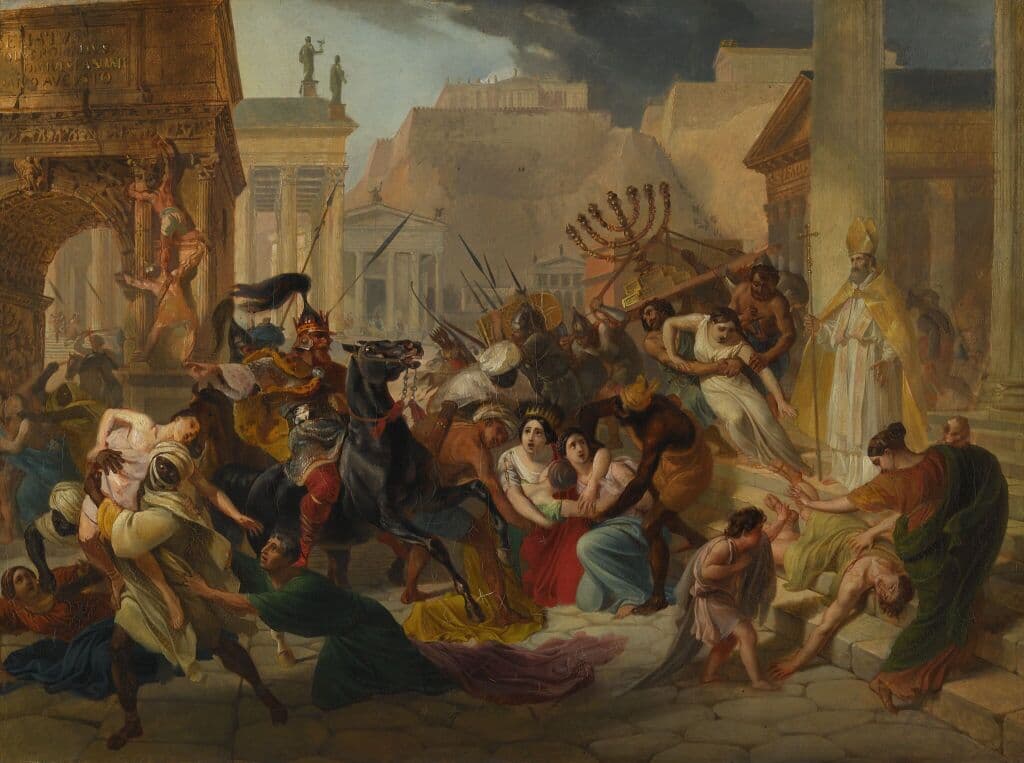
- Title: Genserich’s Invasion of Rome
- Artist: Karl Bryullov (1799–1852)
- Date: 1833–1835
- Medium: Oil on canvas
- Dimensions: 88 x 119 cm
- Location: Tretyakov Gallery, Moscow, Russia
- Photo credit: Tretyakov Gallery, Moscow, Russia
"Genserich’s Invasion of Rome" is a history painting by Karl Bryullov, a leading figure of the Russian Romantic movement. The painting depicts the sack of Rome in 455 CE by the Vandal king Genserich, a pivotal event in the decline of the Western Roman Empire. Bryullov’s composition captures the drama and devastation of the invasion, with chaotic scenes of looting, destruction, and the abduction of Roman citizens.
The painting is notable for its dynamic composition, emotional intensity, and meticulous attention to detail. Bryullov’s use of light and shadow heightens the sense of turmoil, while the expressions and poses of the figures convey the horror and despair of the moment. The artist’s Romantic style emphasizes both the grandeur and the tragedy of historical events, making the painting a compelling visual narrative of Rome’s fall.
Bryullov was partly trained in Rome and became renowned for his historical and genre paintings, which often explored themes of drama, tragedy, and human emotion, including in his most famous work, "The Last Day of Pompeii".
"Genserich’s Invasion of Rome" depicts the sack of Rome by the Vandals in 455 CE, one of the most infamous events in the decline of the Western Roman Empire. Genserich, the king of the Vandals, led his forces into Rome after the assassination of Emperor Petronius Maximus. The Vandals looted the city for fourteen days, taking treasure, slaves, and even the imperial family as captives. One of the top treasures taken was a menorah made out of pure gold taken from the Second Temple in Jerusalem when the temple was destroyed by the Romans in 70 CE. The Arch of Titus, which still stands in Rome, depicts the menorah being carried away by the triumphant Romans along with other spoils of the destroyed temple. In 455 CE, the Vandals are said to have taken the menorah to Carthage in current day Tunisia.
This event marked a turning point in the history of Rome, symbolizing the vulnerability of the once-mighty empire and the breakup of Europe into smaller, separate kingdoms. Bryullov’s depiction of the sack is not only a historical record but also a reflection of Nineteenth-century Romanticism, which often idealized or dramatized the past. The painting captures the tension between civilization and barbarism, a theme that resonated with contemporary audiences in Russia and Europe.