Hieronymus Bosch - The Conjurer (c.1502)
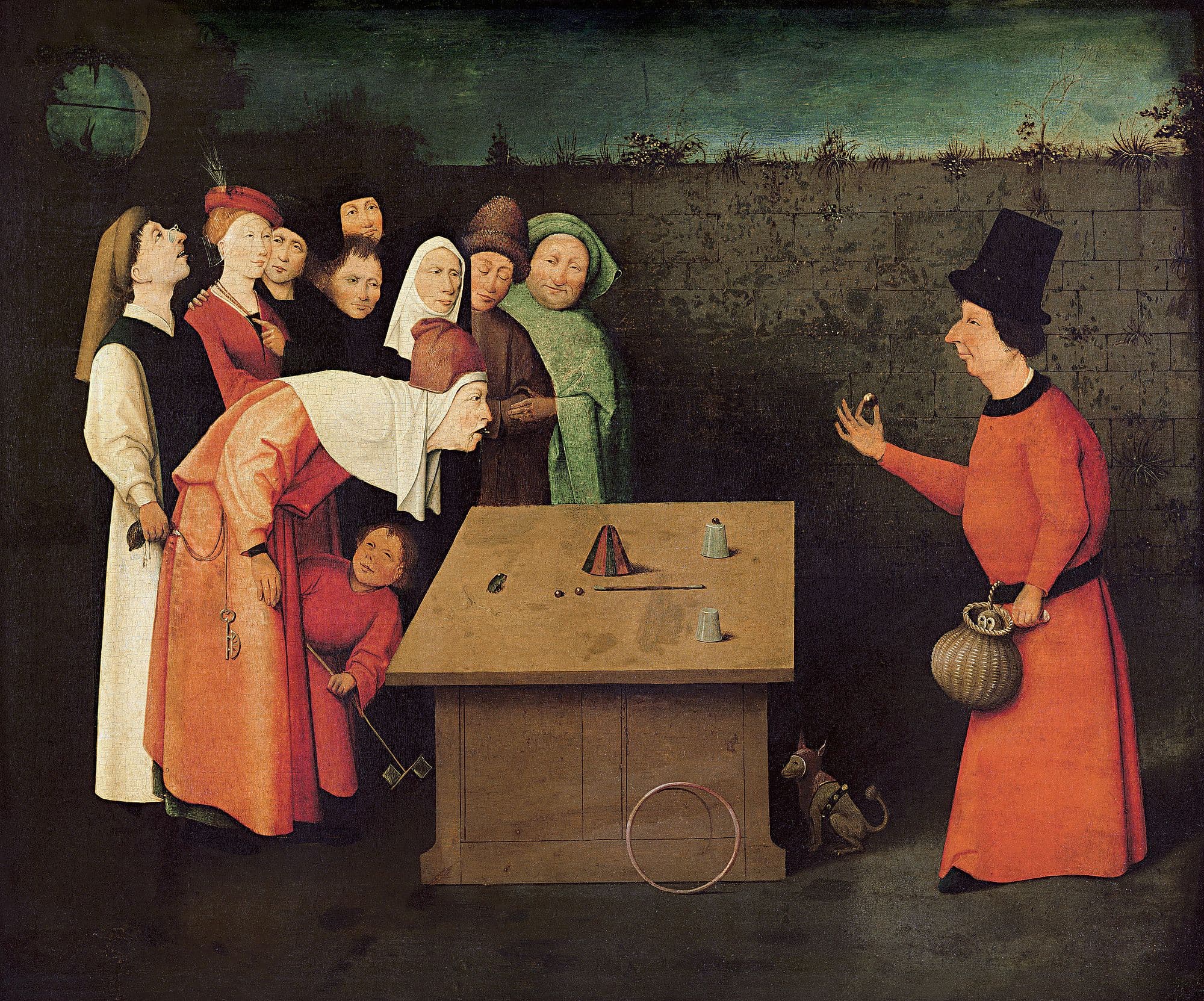
- Title: The Conjurer (L'escamoteur)
- Artist: Hieronymus Bosch (c. 1450–1516)
- Date: c.1502
- Made in: Duchy of Brabant, Burgundian Netherlands (current day Netherlands)
- Medium: Oil on oak panel
- Dimensions: 53.7 x 65.2 cm
- Location: Musée Municipal de Saint-Germain-en-Laye, France
- Photo credit: Hohum on Wikimedia in 2015
"The Conjurer" is a genre painting by Hieronymus Bosch, created around 1502. The work depicts a street magician, performing a cups-and-balls trick for a diverse audience. The magician, dressed in vibrant robes, captivates the crowd with his sleight of hand, while subtly robbing a distracted young boy in the foreground. The painting is rich in symbolism and moral allegory, illustrating the themes of deception, gullibility, and the dangers of being misled by appearances.
Bosch's composition is marked by its intricate detail and narrative complexity. The central figure, a man of rank, is so focused on the magician's trick that he fails to notice his purse being stolen. This scene reflects a Flemish proverb of the time: "He who lets himself be fooled by conjuring tricks loses his money and becomes the laughingstock of children."
Hieronymus Bosch (c.1450–1516) was a Dutch painter from the Northern Renaissance, renowned for his fantastical imagery, moral allegories, and intricate detail.
The Conjurer was created during a period of social and cultural transformation in the Netherlands. The late 15th and early 16th centuries saw a growing interest in moralistic and allegorical art, reflecting concerns about deception, superstition, and the human capacity for folly. Bosch's painting resonates with the Flemish proverbs and moral teachings of the time, which often warned against the dangers of gullibility and the allure of trickery.
The painting also reflects the rise of street entertainment and the popularity of magicians and conjurers in medieval and Renaissance Europe. These performers often used their skills to deceive and exploit their audiences, a theme that Bosch explores with both humor and caution.
"The Conjurer" is significant for its composition and narrative depth. Bosch's use of detailed imagery and symbolic motifs creates a multi-layered scene that invites viewers to explore the complexities of human nature. The painting's focus on deception and the consequences of inattention makes it a powerful commentary on the social dynamics of Bosch's time.
"The Conjurer" is rich in symbolic elements:
- The cups and balls represent the magician's trickery and the illusion of magic.
- The stolen purse symbolizes the consequences of gullibility and the loss of worldly goods.
- The owl is often associated with wisdom or deception.
- The diverse audience reflects the universal nature of human folly and the susceptibility to deception.
- On Wikipedia: The Conjurer (painting)